Bad Bitch Energy Svg: A Designer's Real-World Embroidery Review
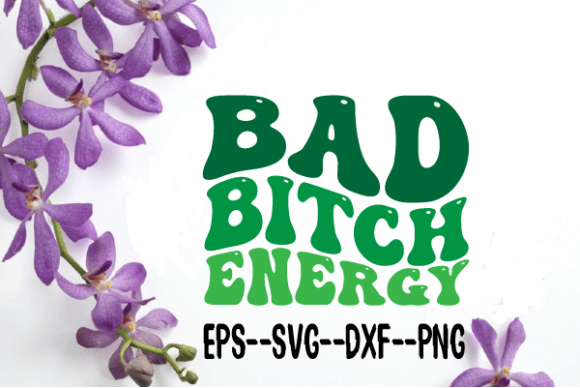
When I first opened the Bad Bitch Energy Svg, my initial reaction wasn't just about the bold text. It was about the attitude. As a designer who has spent years turning digital files into tangible, stitched products for clients and my own shop, I know that a design isn't just an image; it is a promise of how it will hold up under the needle. This piece carries a specific mood—retro, confident, and undeniably sassy. The wavy lines suggest movement, which immediately tells me this isn't a static design meant for a stiff corporate polo. It feels like it belongs on something with personality.
The prompt describes this as a Christmas retro wavy SVG sublimation design, but let's talk about its potential in machine embroidery. While the file formats listed include DXF, EPS, and SVG, which are standard for vector graphics, the true test for any embroidery project is how those curves translate into thread. The "wavy" aspect is crucial here. In the world of machine embroidery design, waves can be tricky. If they are too tight or have sharp angles, the fabric can pucker. If they are too loose, the stitch density might look sparse. From what I can gather of the layout, this design aims for a fluid, 70s-inspired aesthetic that works perfectly for holiday-themed apparel or boutique branding.
From Screen to Stitch: A Real Project Scenario
Let's imagine a real-life scenario. You are preparing inventory for the upcoming holiday season. You want to create a limited run of custom embroidered tote bags for a local craft fair or a special gift set for Etsy customers. You need something that stands out on a shelf full of generic snowflakes and reindeer. That is where Bad Bitch Energy Svg comes in.
I envision taking this design and stitching it onto a heavy-duty canvas tote bag using a deep forest green or a classic burgundy thread to match the retro vibe. The wavy typography would pop beautifully against a natural canvas background. However, if you decide to put this on a sweatshirt, the application changes slightly. For sweatshirt embroidery, you need to consider the bulk. A dense fill stitch might make the hood feel heavy, so a lighter running stitch outline combined with satin stitch for the letters might be the smarter play. The goal is to maintain that "bad bitch energy" without compromising the comfort of the garment.
Another angle is baby items. Yes, you read that right. There is a growing market for "sassy" baby clothes, especially for onesies or bibs. Imagine a soft cotton onesie with this design in pastel pink or mint green. It creates a humorous contrast between the sweet item and the bold message. But remember, when working with baby embroidery, safety and comfort are paramount. You must ensure there are no hard, raised edges that could irritate a baby's skin. This design requires careful digitizing adjustments if you plan to scale it down for small garments.
Where Caution is Key: Fabric and Surface Challenges
Not every surface is a good home for this design. As an experienced reviewer, I have to point out where Bad Bitch Energy Svg might struggle. If you are planning to use this on a cap or hat, the curved surface presents a significant challenge. Wavy designs rely on straight lines to maintain their rhythm, but a curved brim can distort the flow of the text. Unless you have a specialized cap hoop and a very skilled digitizer, the waves might look uneven once stitched.
Texture is another factor. If you try to embroider this on a textured fabric like bouclé or a thick fleece, the details of the waves might get lost. The needle needs a relatively smooth path to create clean satin stitch columns. Similarly, thin fabrics like sheer silk or lightweight polyester blends are risky. Without proper stabilizer support, the tension required to pull the waves tight could cause the fabric to rip or pucker severely. Always test on scrap fabric first.
Dark fabrics require extra consideration. If you choose black thread on a dark shirt, you lose the definition of the wavy lines. You need high-contrast thread colors to make the retro style shine. Furthermore, if the design includes tiny lettering or intricate corners within the waves, these areas are prone to thread breaks. Dense stitch areas can also lead to a "stiff" feel, which might not be desirable for a comfortable pillow cover or a cozy kitchen towel.
Impact on Product Value and Brand Consistency
In the world of craft business and Etsy seller communities, presentation is everything. A well-executed embroidery file elevates a product from a handmade craft to a professional commodity. When Bad Bitch Energy Svg is stitched correctly, it signals confidence. It tells the customer that the brand owner understands their aesthetic and isn't afraid to be bold. This builds trust and encourages repeat purchases.
For commercial embroidery projects, consistency is vital. If you are producing a batch of aprons or holiday gifts, every single item must look identical. Any variation in the wave pattern due to poor digitizing can ruin the perceived value. Customers expect precision. If the waves wobble or the spacing is off, it looks amateurish. Therefore, reviewing the stitch density and ensuring the design is optimized for your specific machine is non-negotiable.
This design also offers great versatility for digital product sellers. Even if you aren't selling physical goods, having a high-quality design asset like this allows you to create printable mockups for social media. You can visualize how it looks on various backgrounds before committing to production. This helps in marketing your handmade product line effectively.
Practical Notes for the Modern Maker
Before you hit the "start" button on your machine, there are several technical checks you must perform. First, confirm the file formats provided. The listing mentions DXF, EPS, and SVG. While these are excellent for cutting machines and sublimation, ensure you have the correct embroidery conversion if your machine doesn't read these natively. You may need to convert them to PES, DST, or JEF depending on your equipment.
Always check the licensing terms. Are you allowed to sell finished items made with this design? Some graphics are for personal use only, while others allow commercial distribution. Clarifying this protects your small shop product business from legal issues. Additionally, inspect the small details. Zoom in on the wavy lines. Do they cross over themselves in ways that would confuse the digitizing software? If so, you might need to manually adjust the paths to prevent thread jumps.
Test the design in black and white mockups first. This helps you see the negative space and the balance of the waves without the distraction of color. Compare how it looks on light versus dark backgrounds. Use the proper stabilizer for your fabric type—cut-away for stretchy knits, tear-away for stable wovens. And finally, always run a test stitch on scrap fabric to check the thread tension and hooping stability.
Bad Bitch Energy Svg is more than just a trendy phrase; it is a design element that demands respect in execution. When handled with care, it transforms simple materials into statement pieces. Whether you are making a personalized gift for a friend or a new bestseller for your online store, understanding the nuances of how this design interacts with fabric and thread is the key to success. Approach it with the same professionalism you would apply to any major embroidery project, and you will likely find it adds a unique spark to your creative portfolio.