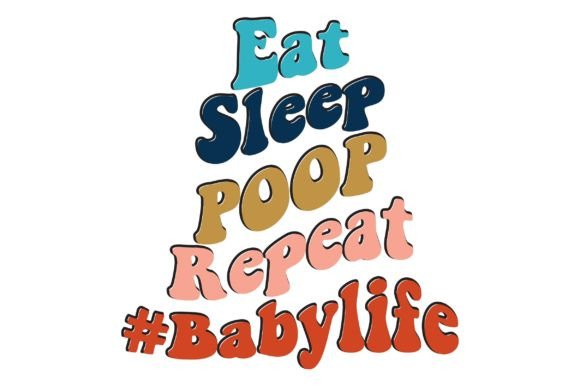
Eat Sleep Poop Repeat Babylife Embroidery Review
When I first opened the files for Eat Sleep Poop Repeat Babylife, my immediate reaction was a mix of amusement and practical assessment. As someone who has spent years turning digital graphics into tangible stitched goods, I know that a catchy phrase is only half the battle; the execution determines whether a product sells or sits in a drawer. This retro Baby SVG design promises to be a staple for anyone looking to add a touch of humor to their nursery decor or baby apparel collection. But does it hold up under the needle? Let's dive into how this design performs in real-world embroidery scenarios.
The First Impression: Mood and Layout
The visual personality of Eat Sleep Poop Repeat Babylife is undeniably playful. It taps into the exhausted but loving reality of new parenthood with a retro aesthetic that feels both nostalgic and modern. For an embroidery designer, the layout is crucial. The text is arranged in a stacked format, which is generally forgiving on various garment placements. However, the "retro" aspect suggests specific font choices that might rely heavily on satin stitch for that clean, bold look. If the lettering is too thin, it risks getting lost on textured fabrics. From a design assets perspective, the balance between the humorous message and the visual weight of the text seems well-calibrated for small to medium-sized projects.
I envision this design not just as a graphic, but as a statement piece. It creates an instant connection with parents who appreciate a bit of levity. When placed on a soft baby onesie or a durable tote bag, the design shifts from being a simple image to a conversation starter. The mood is lighthearted, making it perfect for gifts where the recipient needs a laugh rather than a formal decoration.
A Real-World Test: The Custom Tote Bag Scenario
To truly understand the potential of this file, let's imagine a specific project: creating a boutique-quality tote bag for a local baby shower. The goal is to produce a high-end handmade product that feels personal yet professional. I would start by selecting a sturdy canvas fabric, perhaps in a neutral cream or sage green, to let the retro colors pop.
Using Eat Sleep Poop Repeat Babylife on a tote bag offers a unique challenge. Unlike a flat t-shirt, a tote bag often requires a rigid stabilizer to prevent puckering, especially if the handle attachment points are nearby. The design's compact nature works well here, allowing it to sit neatly above the bottom seam without interfering with the bag's structure. During the stitching process, the fill stitch areas need to be dense enough to cover the canvas weave but not so heavy that they make the bag stiff. If executed correctly, the finished product becomes a cherished item that the new parent will use daily, constantly reminding them of the humorous truth of their new life.
This scenario highlights why this design is a strong candidate for craft business owners. It transforms a generic utility item into a personalized gift. The retro style adds a layer of sophistication that elevates it above standard clip-art, making it suitable for Etsy listings or craft fair booths where buyers are looking for something unique.
Performance Across Different Projects
Beyond the tote bag, the versatility of this embroidery design is impressive. Its simplicity makes it adaptable to a wide range of custom apparel. On a sweatshirt, the design can be centered on the chest for a subtle nod to parenting life. On a baby cap, it fits perfectly within the curved surface, provided the hoop size is adjusted correctly. The text-based nature of Eat Sleep Poop Repeat Babylife means it translates well to kitchen towels and aprons, adding a fun element to the nursery or kitchen space.
For commercial embroidery projects, the design offers excellent value. It is easy to digitize variations of, such as changing the thread colors to match a specific brand palette or adjusting the size for different products like pillow covers or blankets. The retro theme ensures it remains relevant across seasons, making it a safe bet for holiday gifts or year-round inventory. Whether you are an Etsy seller looking to expand your catalog or a hobbyist making a special gift for a friend, this design provides a reliable foundation for creating high-quality items.
Where Caution is Key
However, no design is without its pitfalls. There are specific situations where Eat Sleep Poop Repeat Babylife requires careful handling. Small hoop sizes can be tricky if the design includes fine details or tight kerning. If the letters are too close together, the threads might crowd each other, leading to a muddy appearance. Similarly, working on stretchy fabrics like jersey knit requires a very stable stabilizer to prevent distortion during the stitching process.
Dark fabrics present another consideration. While the retro style likely uses bold colors, ensuring high contrast is essential for readability. If the background fabric is dark and the thread colors are light, the design might lose definition unless a high-density underlay is used. Additionally, on textured fabrics like heavy denim or fleece, the running stitch elements (if any) might get lost. It is always wise to test the design on scrap fabric first to gauge how the thread colors interact with the material texture.
Curved surfaces like caps demand precision. The design must be sized appropriately to fit the curvature without stretching the text unnaturally. If the design is too large, it may wrap around the brim or create tension issues at the top of the hat. For these applications, checking the hoop size and potentially adjusting the placement is necessary to ensure the final product looks professional.
Practical Designer Notes for Success
Before committing to a full production run, there are several technical steps every designer should take. First, inspect the small details in the file. Ensure that the corners of the letters are sharp and that there are no stray nodes that could cause stitching errors. Second, review the stitch density. A design that is too dense can damage delicate fabrics, while one that is too sparse may look cheap. Adjusting the density can significantly improve the finished product's quality.
Testing the design in black and white mockups is a smart move to check the visual balance without the distraction of color. This helps confirm that the layout works regardless of the thread choice. Also, compare how the design looks on both light and dark backgrounds to ensure versatility. Using the proper stabilizer is non-negotiable; it acts as the foundation for the entire project and prevents puckering or shifting.
Finally, always confirm licensing terms before selling finished items or using the design as part of a digital embroidery file package. Understanding whether you have commercial rights is crucial for protecting your small shop product line. By following these guidelines, you can maximize the potential of Eat Sleep Poop Repeat Babylife and create embroidery projects that delight customers and stand out in a crowded market.